
Beef chief urges Aberdeenshire farmers to keep more cows to avoid imports - Press and Journal
23rd February 2026
Region: Scotland
Scotland’s beef chief has warned that 79,000 suckler cows are needed by 2030 to avoid the country losing its market share to imported beef.
National Beef Association (NBA) and Scottish Beef Association (SBA) chief executive Neil Shand said if beef producers can keep a couple more cows and retain a few extra heifers it will avoid losing its critical mass.
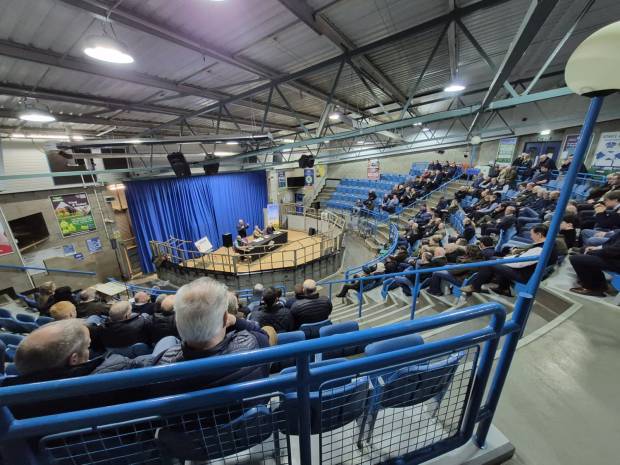
Almost 120 beef farmers and industry stakeholders turned out to discuss the future of the Scottish suckler herd at a meeting at Thainstone this week.
They also discussed the changes that could be made to encourage producers to increase numbers.
The meeting was organised by the SBA as part of its launch of the Keeping Cows in the Community campaign.
It had a particular focus on future support and how it can be better targeted at active producers, as well as the changes to inheritance tax reform (IHT).
Beef chief warns that 79,000 suckler cows needed by 2030
Alistair Carmichael, Orkney and Shetland MP and EFRA committee chairman, was part of the panel alongside SRUC’s agricultural economist Steven Thomson and Aberdeen and Northern Marts’ director of livestock John Angus.
Neil Shand, chief executive of the National Beef Association (NBA), told the audience that the campaign was not aimed at getting more money from the Government but to make sure those who keep cows are properly supported.
“The Scottish Government has decided not to follow the Climate Change Committee‘s guidance on a reduction of livestock numbers and this is very significant,” said Mr Shand.
“We need to make better use of the money that is allocated and make sure it is given to active producers and the people who have cows now, rather than those who do not have cows.”
Guest speaker Alistair Carmichael, who runs 200 Blackface ewes and 14 Highland cross Beef Shorthorn cattle on his hill farm on Islay, said the NBA’s new campaign is one of the most important initiatives he has seen for a while.
‘We need to make sure money is given to people who have cows’
“For the last 10 years, livestock numbers have been going off a cliff, with a reduction of 15% in the UK and 3.5% in Scotland last year alone,” said Mr Carmichael.
“If we carry on at that rate, we will very soon lose critical mass and then the industry is gone. We have already opened our doors to other countries.
“But if we leave this to the Government to sort, I promise you it’ll go wrong.
“The people who know what can be done and what needs to be done are the people who are sitting in this room.”
Mr Carmichael also highlighted the industry’s success of the U-turn in IHT.
“Do not underestimate the scale of the achievement that this industry got when we saw the uplift from £1 million to £2.5m,” he added.
‘If we leave this to the Government to sort this, I promise it’ll go wrong’ says Alistair Carmichael
“There will still be some really hard cases in this and it will be some of the most tragic cases that will produce the worst outcomes.”
Steven Thomson from SRUC said since 2000, there are 22% fewer cattle in the north-east, with the biggest decline since the government shifted to area payments.
He predicted that farmers are “stuck with what they have got at the moment” and he doesn’t think the basic payment and LFASS systems will change until 2030.
John Angus from ANM highlighted that last year there were on average 1.5 store cattle per consignor less and from 2023, two cattle less per consignor.
Farmers in the audience pointed out the struggles in sourcing labour to work in suckler herds and the cost involved to pay them.
